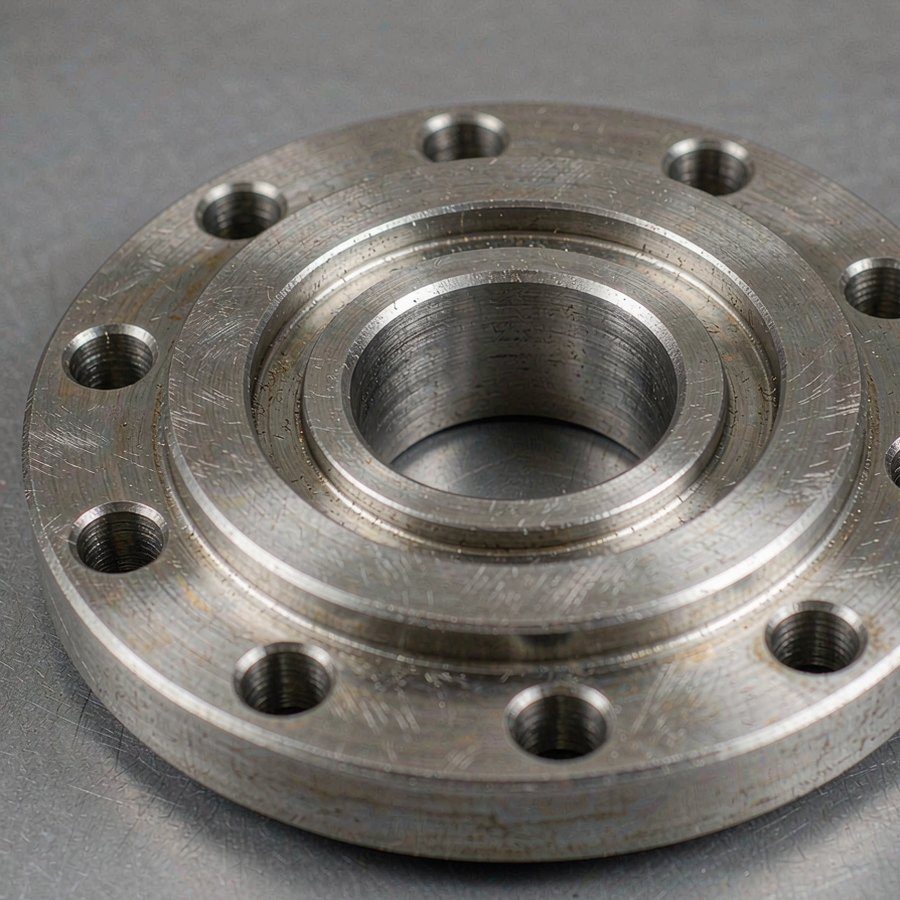
An annular interface disc combines a broad circular face, concentric stepped geometry, a centre bore and a retained dark insert that must stay coaxial through machining and assembly.
One axis, several diameters
Every feature on a disc of this kind is defined against the rotational axis: outer diameter, step shoulders, centre bore and the insert seat. Turning the part in a single clamping keeps those diameters concentric by construction rather than by correction.
Face flatness after stress release
Removing material from one face changes the residual stress balance, and a disc that measured flat on the bench may bow after a few hours. Rough machining, a stabilising pause and a light finishing cut is the usual defence.
Holding the insert seat
The insert seat needs a controlled depth and a clean corner radius so the insert sits without rocking. Depth is measured against the finished face, not the rough surface, otherwise the insert stands proud.
Inspection results that matter
Circular runout, bore diameter, seat depth and face flatness are the four figures that decide whether the disc seals and rotates without wobble.
- Bore diameter and concentricity to the outer diameter
- Seat depth measured from the finished face
- Face flatness across the full annulus
- Circular runout after final clamping
Have a part ready for engineering review?
Send drawings, material, quantity and finish requirements for a practical quotation.