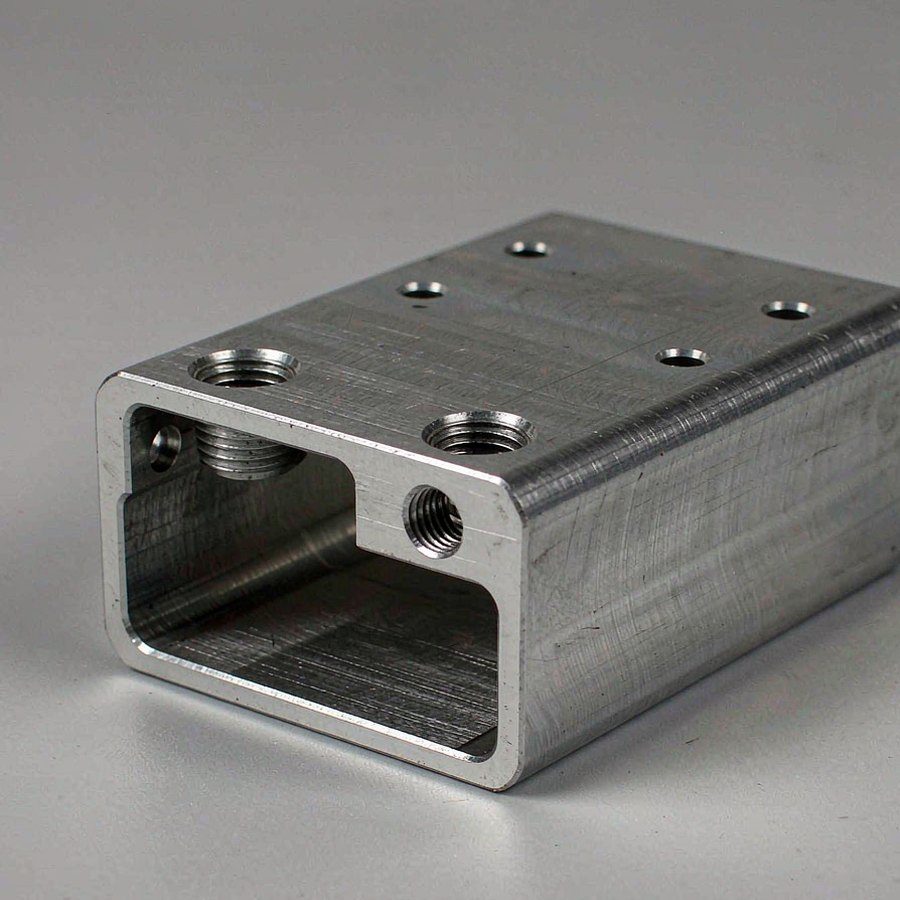
A multi-opening interface panel packs a dense rectangular aperture field, custom profile cut-outs, narrow connecting webs, rear mounting bosses and side-access slots into one long enclosure component.
Narrow webs decide the sequence
When apertures are separated by webs of a few millimetres, the order in which they are cut determines whether those webs survive. Removing every other opening first keeps the panel stiff enough to resist cutting forces.
Rear bosses without distorting the face
Bosses on the rear face are machined from the back, which means a second setup. To protect the visible front, the part is supported on a machined fixture rather than on its finished surface.
Side slots and access
Side-access slots are usually for connectors or cable entry. Their position relative to the aperture field matters more than their individual size, because a connector that misses its slot by a millimetre will not seat.
Flatness as the primary check
On a long panel with many openings, flatness is the result that predicts assembly success. A panel that bows will not sit into its frame regardless of how accurate each aperture is.
- Aperture field position and pitch
- Web thickness after machining
- Rear boss height and position
- Panel flatness over the full length
Have a part ready for engineering review?
Send drawings, material, quantity and finish requirements for a practical quotation.