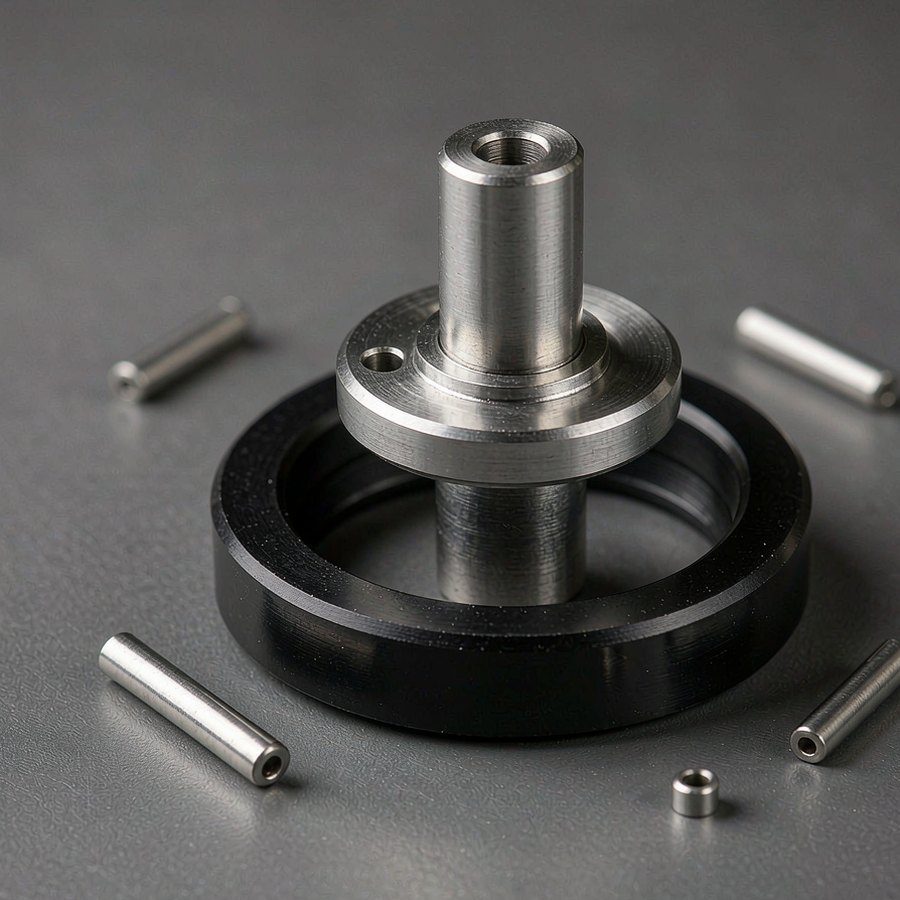
A clevis-end shaft combines a long cylindrical body, twin fork arms, cross-hole interfaces and longitudinal slots that must stay coordinated around the functional pin axis.
Defining the pin axis first
The cross-hole through the fork is the functional centre of the part. Every other feature — slot position, shoulder length, fork gap — is referenced to it, so the hole is machined while the shaft is still held on a reliable cylindrical datum.
Fork arms without spread
Machining the gap between the arms releases material on both sides. If the slot is cut before the cross-hole, the arms can relax apart and the hole no longer sits square to the pin.
Longitudinal slots
Shaft slots are often weight reduction or locating features. Their depth is measured from the turned surface, which means turning has to be finished first.
Checks that predict function
Fork gap, cross-hole squareness and slot alignment determine whether the clevis mates with its mating part without binding.
- Cross-hole diameter and squareness to the shaft axis
- Fork gap width and parallelism
- Slot depth measured from the finished diameter
- Overall length to the shoulder face
Have a part ready for engineering review?
Send drawings, material, quantity and finish requirements for a practical quotation.